Microcontroller projects
last updated: 2026-05-16
Quick links
- Introduction
- Resistance
- Temperatures Original Pico2
- Temperatures Waveshare RP2350-zero
- PD Receiver Fast Charging Module
- Conclusion
Pico: Maximum current on VBUS
Introduction
What is the maximum current I can safely draw from the Pico's VBUS pin?
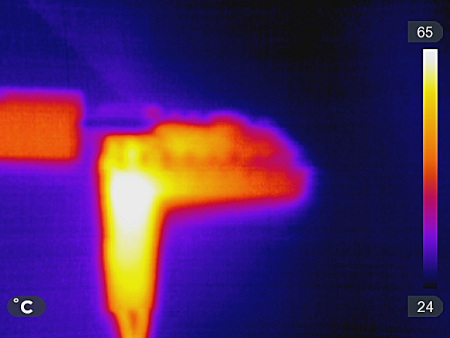
Naturally the current is limited by the USB power source and the USB cable itself, but modern power supplies can deliver up to 3 A and the PD charge cables are thick enough to transport the 3 A.
The Pico’s official documentation suggest that you should not draw more than
a few hundred mA from VBUS to avoid overloading the USB port or the Pico’s PCB traces.
I think we can draw a lot more than 500 mA as the traces are very short. So let's try it out.
I used the following gear:
- UGREEN 140 W power supply
- Seek Shotpro thermal camera
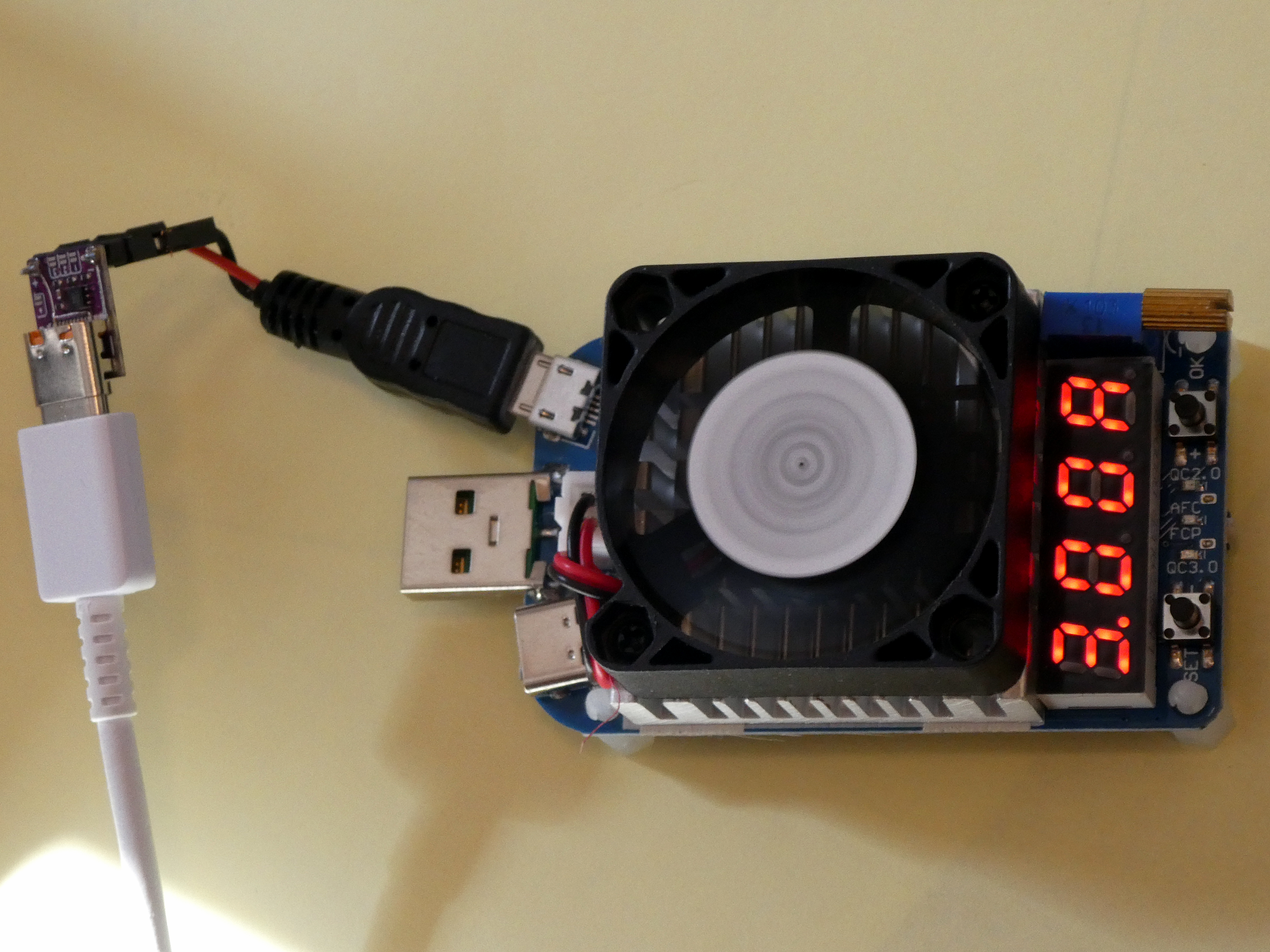
- Intelligent USB Load HD35 (35 W) from joy-it
- PeakTech 2705 milliohm meter
The measurements took place in a normal heated room (22 °C). For every temperature measurement I waited 15 minutes for the end temperature to stabilize.
I used an original Pico2 with micro USB connector and a Waveshare RP2350-zero with USB-C connector for my tests.
Resistance
A resistance check before the connector to the pins gave lower values for the original Pico:
| Board | Resistance 5 V trace | Resistance GND trace | Overall resistance |
|---|---|---|---|
| Original Pico | 32 mΩ | 33 mΩ | 65 mΩ |
| Original Pico2 | 31.5 mΩ | 31 mΩ | 62.5 mΩ |
| Waveshare RP2350-zero | 55 mΩ | 33 mΩ | 88 mΩ |
Clearly we got a higher resistance for the Waveshare RP2350-zero! So this should also show in the temperatures.
Temperatures Original Pico2
The Pico has a micro USB connector. These connectors are rated for 1.5 A and not for 3 A like the USB-C connectors. We get higher voltage drop on the pins than with the RP2350-zero.
The voltage drop and power are calculated values.
| Voltage VBUS | Current | Voltage drop traces (I*R) | Power (I²*R) | Temperature |
|---|---|---|---|---|
| 5.12 V | 0.5 A | 0.033 V | 0.016 W | 24 °C |
| 5.04 V | 1 A | 0.033 V | 0.065 W | 25 °C |
| 4.97 V | 1.5 A | 0.098 V | 0.146 W | 26 °C |
| 4.9 V | 2 A | 0.130 V | 0.260 W | 30 °C |
| 4.8 V | 2.5 A | 0.163 V | 0.406 W | 33 °C |
| 4.73 V | 3 A | 0.195 V | 0.585 W | 38 °C |
| 3.9 V | 3.5 A | 0.228 V | 0.796 W | 44 °C |
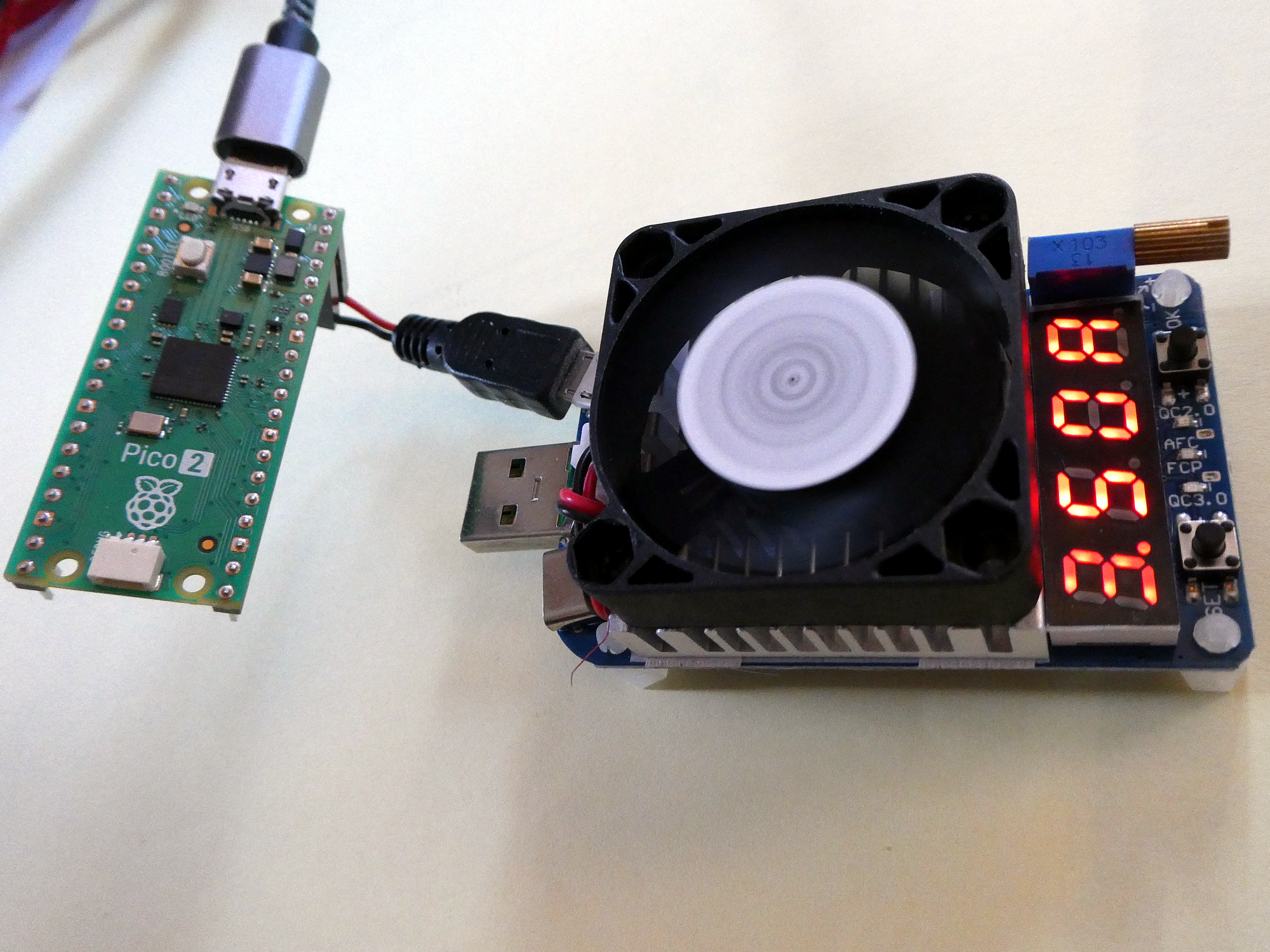
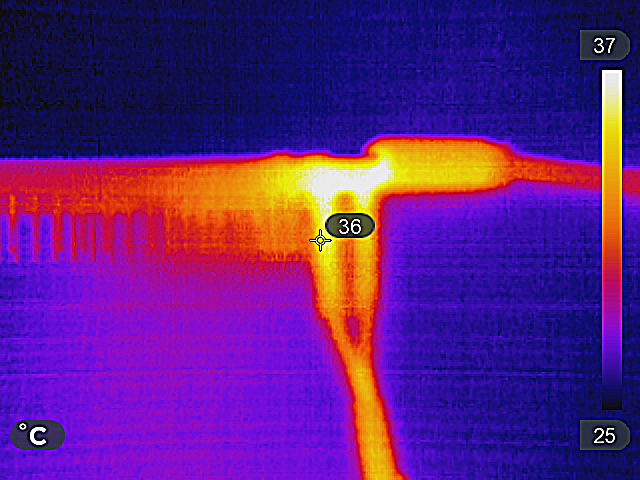
As expected at 3.5 A the 3 A PD power supply dropped the voltage to 3.9 V
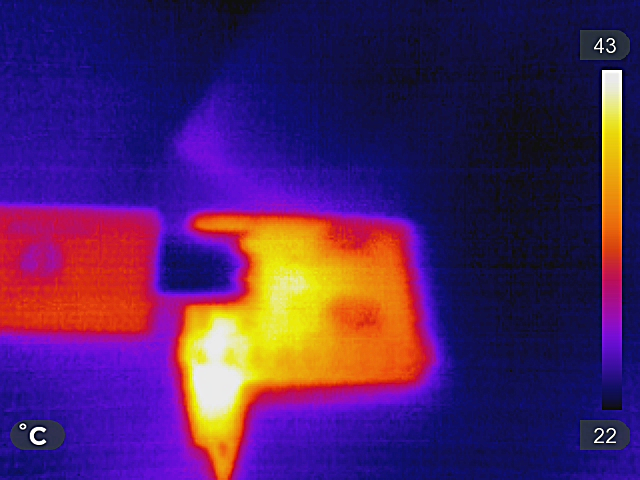
Temperatures Waveshare RP2350-zero
| Voltage VBUS | Current | Voltage drop traces (I*R) | Power (I²*R) | Temperature |
|---|---|---|---|---|
| 5.15 V | 0.5 A | 0.044 V | 0.022 W | 25 °C |
| 5.10 V | 1 A | 0.088 V | 0.088 W | 29 °C |
| 5.08 V | 1.5 A | 0.132 V | 0.198 W | 31 °C |
| 5.03 V | 2 A | 0.176 V | 0.352 W | 37 °C |
| 5.0 V | 2.5 A | 0.220 V | 0.550 W | 44 °C |
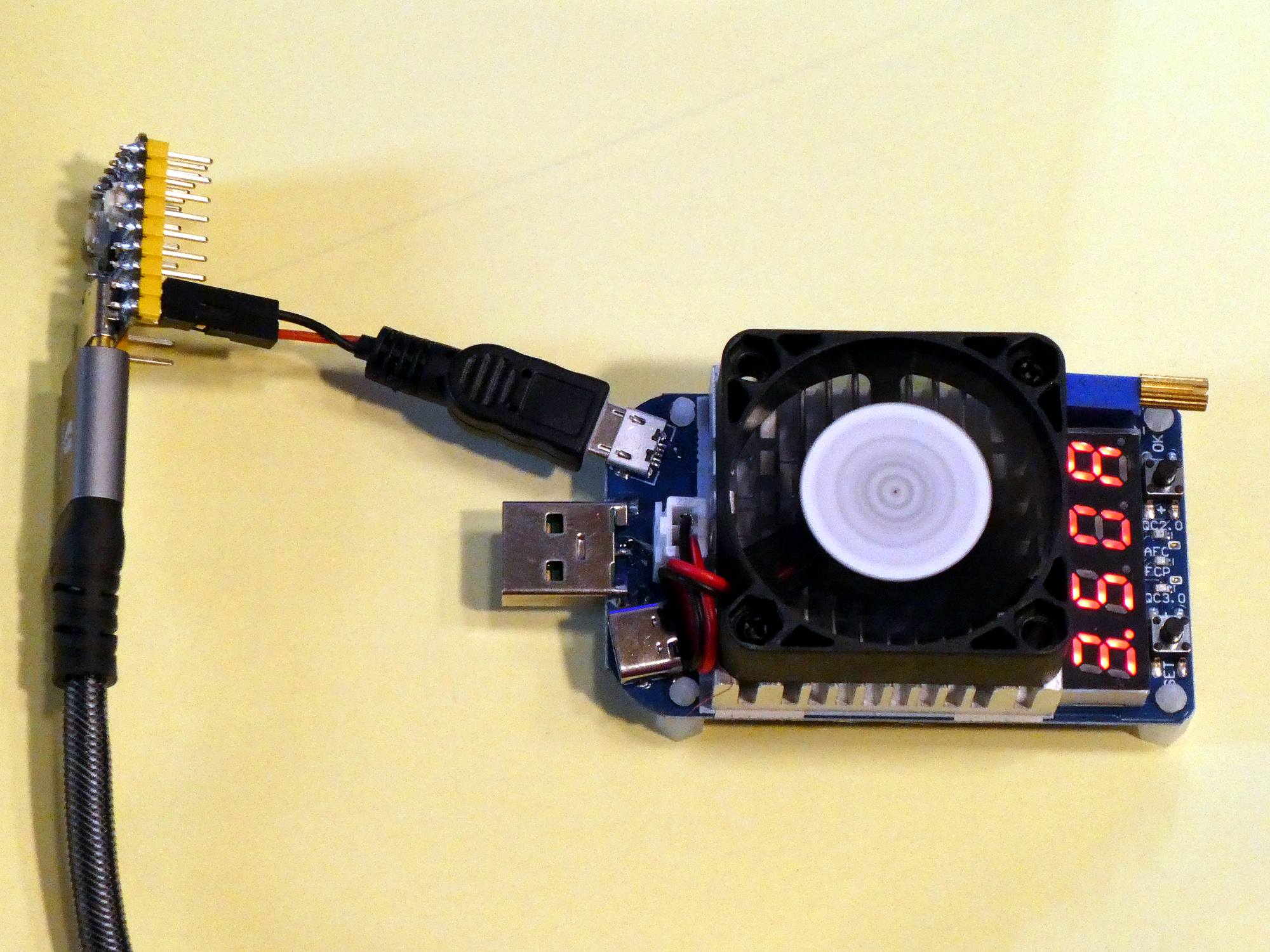
| 4.94 V | 3 A | 0.264 V | 0.792 W | 51 °C |
| 4.00 V | 3.5 A | 0.308 V | 1.078 W | 60 °C |
PD Receiver Fast Charging Module
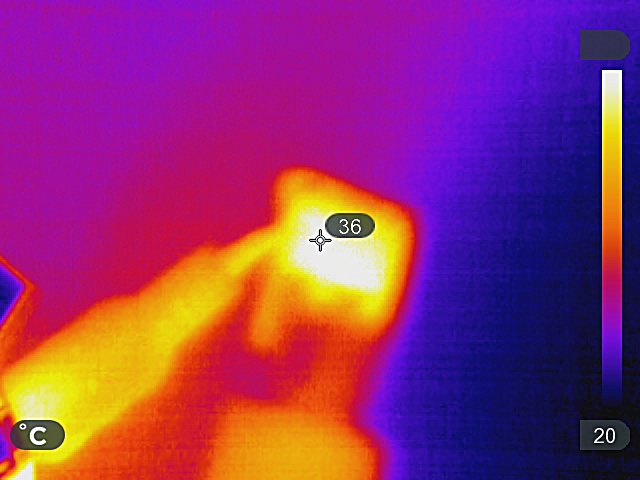
I also tested a board from ICGOICIC with a chip that can deliver different voltages (5/9/12/15/20/28/36/48 V) from a PD power supply.
Set to 5 V the board delivers 4.6 V at 3 A. The temperature was 37 °C.
Conclusion
If you draw more than 500 mA, you do so at your own risk, of course. The tests are not universally applicable, as poor solder joints or similar issues may cause the temperature to rise.
But I think if you use VBUS while programming for tests e.g to power WS2812b RGB LEDS and draw up to 3 A there is no real issue. In the case of the original Pico in particular, the results are almost identical to those obtained using a special PD breakout board.
The absolute maximum temperature was 65°C at one setup. If you stay physically with the material you can intervene if it starts to smell funny :).
